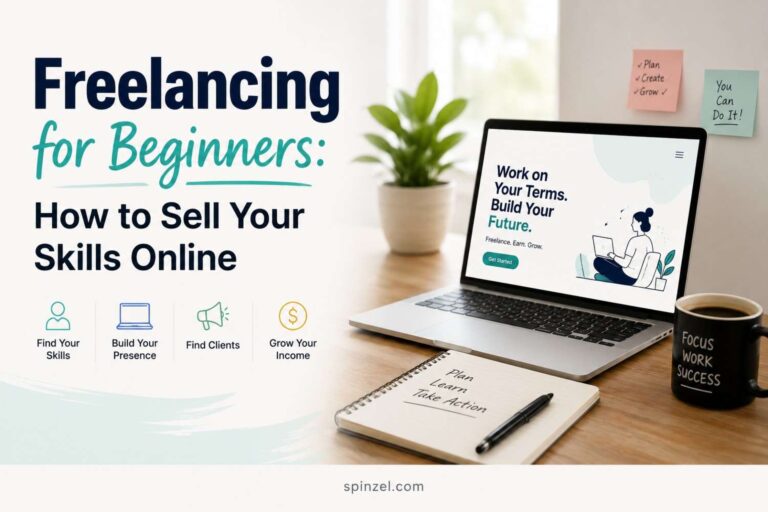
Freelancing for Beginners You have a skill. Someone out there will pay for it. That’s the entire premise of freelancing. And once you accept that, everything else becomes an execution problem, not a confidence problem. The freelance economy isn’t some niche corner of the internet anymore. Businesses of every size are hiring independent professionals to […]
You have a skill. Someone out there will pay for it. That’s the entire premise of freelancing. And once you accept that, everything else becomes an execution problem, not a confidence problem.
The freelance economy isn’t some niche corner of the internet anymore. Businesses of every size are hiring independent professionals to fill skill gaps faster and cheaper than traditional hiring allows. That’s not going to reverse. If anything, demand for skilled freelancers keeps climbing year over year.
What nobody tells beginners clearly: the barrier to entry is lower than you believe. What stops most people isn’t lack of talent, it’s lack of direction. This guide fixes that.
Not every side hustle deserves your time. These freelance jobs for beginners are accessible, scalable, and genuinely in demand — not just popular on Pinterest boards.
Whether you have two focused hours daily or ten, one of these paths fits your current life.
Businesses need content constantly: blog posts, emails, product pages, scripts. If you write clearly and can match a brand’s voice, you’re employable. Niche down fast. Writing about finance, health, or SaaS pays significantly more than general content. Start on Upwork or Fiverr and build from there.
Strong visual instincts and tools like Adobe or Canva are enough to land your first paid gig. Logo work, social media graphics, and pitch decks are always in demand. 99designs and DesignCrowd are worth exploring as the best freelance websites for beginners in the design space.
Underrated and high-demand. VAs manage inboxes, calendars, research, and customer communication all remotely. The skill floor is low, and the upside scales quickly as you specialize. Belay and Time Etc are solid platforms to check out.
Most business owners know they need social media. Most of them hate managing it. If you understand content rhythm, platform nuances, and basic analytics, you can charge $500–$2,000/month per client. PeoplePerHour is a great starting point.
Higher learning curve, higher earning ceiling. Platforms like Toptal connect developers with premium clients. If you’re still building skills, freeCodeCamp opens the door to learning without costing you a rupee.
Earning while you build? Smart move. Try paid surveys on Spinzel. A legitimate way to earn on the side while your freelance pipeline develops. Stack income streams early.
Freelancing for beginners while managing existing responsibilities takes real structure. The people who burn out aren’t working harder — they’re working without a system. Fix the system, and the grind becomes sustainable.
Don’t squeeze freelancing into whatever time is left. Reserve it. Even 90 minutes at 6 AM or 9 PM compounds dramatically over weeks. Treat those hours like paying client meetings because they are.
Trello or Notion costs nothing and handles everything like deadlines, client notes, and deliverable status. Disorganization kills freelance careers quietly. Don’t let it.
Communicate turnaround times before the project starts. Be responsive, but define your working hours clearly. Clients who respect boundaries are the ones worth keeping long-term.
Writing three articles in one session beats one article across three scattered days. Batching keeps cognitive momentum. Apply it to emails, invoices, pitching, anything repetitive.
Want more income ideas that work around your schedule? Explore how to make money online with methods that run alongside your freelancing.
Most new freelancers make the same mistakes. Knowing them before you hit them is worth more than any course.
Low rates attract bad clients who are demanding, disrespectful, and impossible to retain. Research what others charge using Bonsai’s freelance rate guide or Glassdoor. Price to the market, not to your insecurities.
Clients won’t hire on trust alone. Create two or three samples that demonstrate your range — even if they’re self-initiated projects. Host them on Behance (design) or a quick personal site via Carrd.
Pick one or two of the best freelance websites for beginners and build a reputation there first. Ten mediocre profiles beat nothing, but one strong profile beats ten mediocre ones every time.
Freelancers are self-employed — that means tax obligations and legal exposure that employees don’t face. Use Wave for invoicing and AND.CO for contracts. Not optional. Not later.
Readiness is an affirmation you tell yourself to delay action. Post your profile today. Send one pitch this week. The first client is always very difficult to find. After that, it gets mechanical.
Bridging the income gap while you land your first clients? Spinzel’s online paid surveys are a no-commitment option that keeps money moving while your freelance pipeline fills up.
Freelancing for beginners rewards action over preparation. The fundamentals aren’t complicated: pick a skill, build proof of work, price fairly, and show up reliably. Most people who fail at freelancing don’t lack skill — they stall before the first real attempt.
You don’t need a perfect website, a premium membership, or six months of runway. What works is a well-built profile, a standout sample, and the commitment to keep sending proposals without giving up.
Start parallel income streams while you build. Check out how to make money online in 24 hours, because waiting for freelancing to replace your income before earning anything is a strategy that works against you.
Actionable Takeaways:
Upwork, Fiverr, and PeoplePerHour are strong starting points based on your specific skill.
Create two or three portfolio samples, pick one platform, and start pitching. Experience follows action; it is not the other way around.
Most beginners earn $500–$2,000/month initially. Income scales with consistency, client retention, and rate increases over time.
Generally, no, if operating under your legal name. Always verify with local regulations; rules vary significantly by location.
Writing, web development, graphic design, virtual assistance, and social media management consistently top the demand for freelance jobs online for beginners.