Landing on a paid market research dashboard only to see immediate disqualification notices drains your energy and lowers your hourly return. You open a three-dollar questionnaire, answer a few initial screening questions, and get dropped before accessing the main topic. Mastering how to qualify for more surveys comes down to understanding market research mechanics, maintaining […]
Landing on a paid market research dashboard only to see immediate disqualification notices drains your energy and lowers your hourly return. You open a three-dollar questionnaire, answer a few initial screening questions, and get dropped before accessing the main topic.
Mastering how to qualify for more surveys comes down to understanding market research mechanics, maintaining reliable platform profiles, and timing your participation strategically. With deliberate adjustments to your daily routine, you can turn repetitive screen-outs into steady project completions.
Experiencing frequent disqualifications is standard procedure across the consumer research landscape. Enterprise brands invest capital to gather insights from narrowly defined target groups, such as IT decision-makers or primary household shoppers. When your current demographics fall outside those target parameters, the screening system routes you out to protect project budgets and maintain dataset accuracy.
Targeted quotas: Study slots for specific demographics fill rapidly after release.
Geographic parameters: Regional research initiatives filter out participants outside target postal zones.
Data consistency checks: Automated algorithms cross-reference incoming answers with historical platform records.
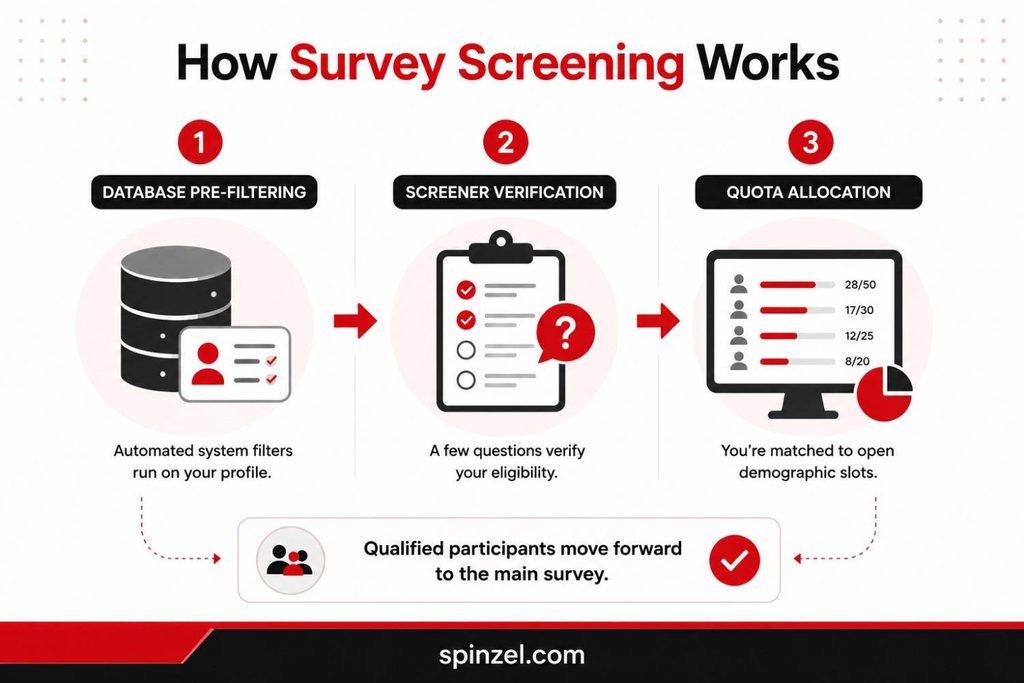
Getting screened out means your specific background or shopping behavior does not match the precise parameters required for an active research study. Market researchers deploy preliminary survey screening questions to confirm respondent eligibility before opening the primary study. When a profile divergence occurs, the automated platform closes the questionnaire early.
Pinpointing the exact operational triggers behind disqualifications allows you to adjust your selection strategy and protect your time.
Brands often require specific consumer groups, such as individuals purchasing electric vehicles within the past six months. Missing a single criterion point prompts an automatic exit.
Surveys balance respondent pools by age, region, and industry. If the quota for your specific age cohort is already full, the system drops your session immediately.
Researchers include embedded trap prompts, such as “Select ‘Somewhat Agree’ for this item” or basic math verification. Skipping past these flags your account as automated activity.
Stating on your main profile that you own your residence, while choosing “renter” on a screener, creates a data conflict that terminates the session.
Research software measures page dwell time. Rapidly clicking through matrix grids in under ten seconds triggers anti-speeding algorithms and closes the questionnaire.
Projects regularly exclude respondents working in advertising, public relations, or consumer research to avoid industry bias in the dataset.
Operating behind a proxy or VPN triggers automated IP verification flags on enterprise research routers, resulting in an instant drop.
Some studies demand full desktop displays, physical keyboards, or webcams. Accessing desktop-configured studies from a mobile screen causes immediate device mismatch exits.
Enterprise B2B surveys require verified corporate purchasing authority. Stating that you hold no input on departmental budgets terminates enterprise surveys.
Aggregators maintain internal respondent reliability ratings. Accounts with low trust ratings due to rushed submissions receive fewer accessible study allocations.
Before any questionnaire goes live, market research teams configure target participant profiles based on project goals. Platforms rely on algorithmic filters to compare stored user details against live project parameters, deploying screener questions to verify respondent suitability before granting access to the core survey.
You can start earning from paid surveys on Spinzel.
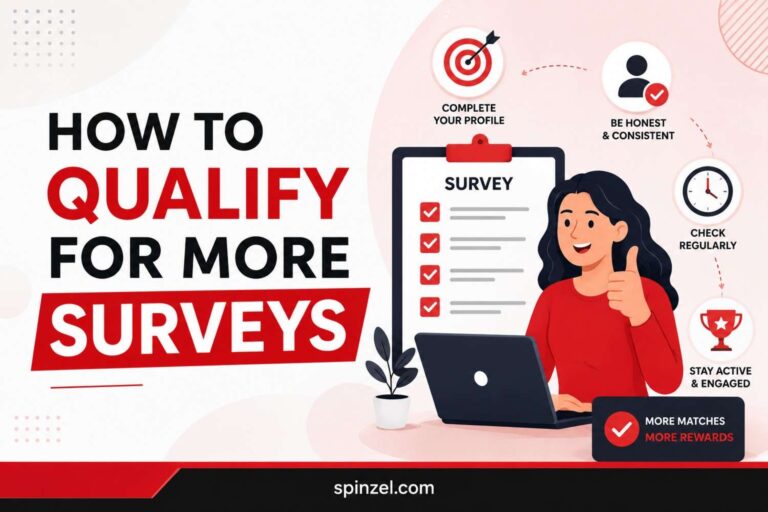
Improving your daily completion rate requires treating platform sessions with methodical care. To understand how to qualify for more surveys, implement consistent account management and deliberate answering habits during every session.
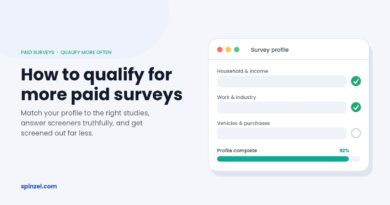
Fill out every available category on your platform dashboards, covering vehicle ownership, household technology, and retail habits. Comprehensive profile attributes allow platforms to match you with suitable studies.
Maintain an authentic reading pace across all screens. Allocate three to five seconds to single-choice questions and twenty seconds to multi-row matrices to signal genuine engagement.
Always access survey platforms using a direct residential internet connection. Survey verification tools follow standards aligned with Federal Trade Commission consumer guidelines to prevent fraud and confirm authentic regional participation.
Altering your answers to match perceived survey requirements creates severe account risks. Research platforms embed cross-checking algorithms across different projects to catch conflicting household data. When contradictory entries get flagged, the platform freezes pending payouts and locks your account profile permanently.
Selecting studies with realistic qualification odds requires looking past high advertised payout rates. Prioritize projects with broader consumer criteria, moderate completion times, and steady quota targets. While high-paying enterprise studies carry strict filters, standard consumer goods questionnaires deliver much higher completion rates.
If you are looking for vetted reward platforms offering dependable study streams, check out this InboxDollars review for breakdown details and platform tips.
Protecting your time ensures your hourly participation rate remains viable. Establish a firm time limit for intake questions. If an intake router keeps you answering demographic screeners for more than four minutes without opening the main survey, exit the session and move to another listing.
Survey sites use different routing technologies to connect users with projects. Some platforms rely on third-party aggregators where rejection rates multiply, while dedicated research panels host proprietary studies with higher direct qualification rates. Evaluating both types helps you identify platforms that best fit your profile.
A disqualification occurs during the initial screening stage before data collection begins, ending the session without harming your account standing. A rejection occurs after you complete the full questionnaire, typically triggered by speeding flags, failed attention checks, or contradictory responses. Rejections void your payment and lower your platform quality score.
Disqualification: Occurs during screening; preserves your platform standing.
Rejection: Occurs after completion; withholds payout and damages profile trust.
If disqualifications persist across every platform, audit your operational setup. Clear browser data, review dashboard profiles for outdated employment or household details, and expand your portfolio of reputable survey panels.
You may also want to explore how to make $100 with paid surveys,
Maximizing your survey earnings is about applying smart screening habits rather than relying on luck. By maintaining thorough profile data, answering attention checks carefully, and prioritizing broad consumer studies, you can consistently bypass intake hurdles. Apply these structured fixes to your daily sessions to secure higher completion rates and build a dependable extra revenue stream.
Poorly optimized survey routers sometimes place screening questions deep into questionnaires. If you find yourself answering introductory demographic questions past the four-minute mark without seeing the main study, exit the session to protect your time.
Yes. Survey networks employ fraud detection software that flags proxy and VPN connections. When an active VPN is identified, the system terminates the session immediately and may place a permanent hold on your account.
Complete all demographic profile modules on your platform dashboard and log in during morning hours. Starting early lets you access newly launched studies before participant quotas fill up for your demographic group.
Yes. Speeding through matrices, straight-lining answers, and missing attention checks reduce your internal platform rating. A lower score limits your access to high-value studies across market research exchanges.
Certain corporate studies require desktop screen dimensions, external keyboards, or webcam tools. Launching desktop-optimized studies through a mobile browser results in immediate disqualification due to device incompatibility.